
Temperature and humidity IoT alarm: SIM connected, external antenna, wall mounted. Temperature, humidity, power loss, lost phase and voltage faults reach the phone, with voice call alerting and exportable curves in the app.
| Connectivity | 4G SIM, external antenna |
|---|---|
| Sensing | Temperature, humidity (one probe) |
| Alarm | Phone push plus call |
| Binding | Account QR plus device QR |
| Mounting | Wall mount, base feet |
| Taobao | https://item.taobao.com/item.htm?id=784295619721 |
The photo shows two halves of one product: a phone on the left, a wall-mounted box on the right. Black housing, orange faceplate reading "temperature and humidity IoT alarm", two U-shaped mounting feet on the underside — two screws and it sits on a wall or inside a control cabinet. It does not control anything. It does one job: when temperature or humidity in a house goes wrong, the person with the phone finds out.
The row across the top is its status
Five positions above the label: power, run, alarm, communication, and on the right an antenna connector. That connector tells you it is a SIM-connected unit with an external antenna, which can be raised or moved if signal inside the house is weak. The same row sets the order you troubleshoot in — nothing lit means check the supply, lit but not blinking means look at run, communication dark means the SIM or the signal.
Two QR codes, and then the step people skip
Two codes side by side: the official account code on the left, the device code on the right. Their division of labour is the most commonly skipped step with this class of device.
Scan the left one to follow the account, and the alarm has somewhere to go. Scan the right one to bind this box to your account, and the alarm knows who to look for. Skip either and the box can blink away in the house all night while nothing arrives at home. One box answers to one owner, and the binding has to be done on site before anyone leaves.
First screen in the app: the device is alive
Top of the detail page: signal bars, a green "online", the device name "poultry", alarm status "no alarm", and below that software 3.1.3 and hardware V4.1.
The name is editable. On a farm with a dozen boxes, a screen that says "brooder house" or "layer house 2" gets a faster reaction at two in the morning than one that says 8679001. The version line is ignored day to day and earns its place when someone calls for support: the factory can match it immediately.
Temperature and humidity belong together
Two readings: temperature A 20.74 °C, humidity 82.04%.
20.7 °C on its own is reasonable for late brooding or for layers. Pair it with 82% and the picture changes — warm enough but wet, and the house is stuffy. Damp litter, rising ammonia, coccidiosis and respiratory trouble all follow. Nobody feels that standing in the aisle for a minute; two figures side by side show it. Which is why the probe should not be temperature only: in a poultry house, humidity is not optional.
A curve says more than a number
Below that sits the temperature and humidity curve, counted by day, one line each, exportable from the top right.
A number describes this instant; a curve describes these days. What time it dropped overnight, when it spiked during the day, how far humidity fell after the fans started — all of it is in the line. Talking to a vet, checking a ventilation plan with a technician, or reviewing a batch against the last one, an exported chart does more than saying "it has been a bit damp lately". Alarms cover what is happening now; the curve covers what it has been like all along.
How it divides work with the other two alarms
Two others are in the range: a power-failure and lost-phase sound-and-light beacon, which flashes and sounds inside the house for people who are there; and a 4G networked alarm box with three-phase voltage sensing, aimed squarely at power loss, lost phase and voltage faults, pushed to the phone.
This one watches the environment: temperature, humidity, and high or low limits extended through probes. They divide the job rather than replace one another — beacon where people are present, the networked box where nobody is and the worry is electrical, and this unit where the worry is a house that has gone stuffy, damp or off temperature.
Three things to settle before ordering
One, one point or several: this is a single temperature and humidity probe, one per house is clearest; several houses on one screen needs a multi-channel model.
Two, probe cable length: the probe belongs at animal height, not on the box, so give the length from the house dimensions.
Three, who receives the alarm: the account can hold several people — manager, technician, owner — and whoever sees it first deals with it.
Phone: +86 199 3789 6911.
Popular products
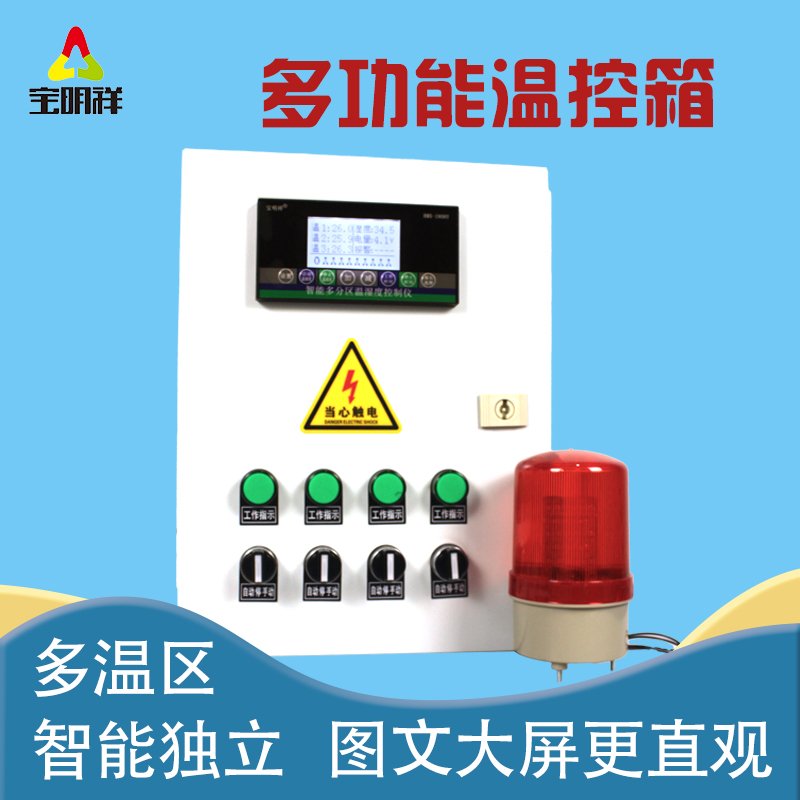 Livestock temperature control cabinets
Multi-function temperature and humidity cabinet: multi-zone display, power-failure and high/low alarms
Baomingxiang multi-function cabinet: a graphic LCD listing temperature and humidity zone by zone, an internal battery so display and alarm survive a mains failure, four run lights with Auto/Off/Manual selectors, and a red sound-and-light beacon for over-temperature, under-temperature and power loss.
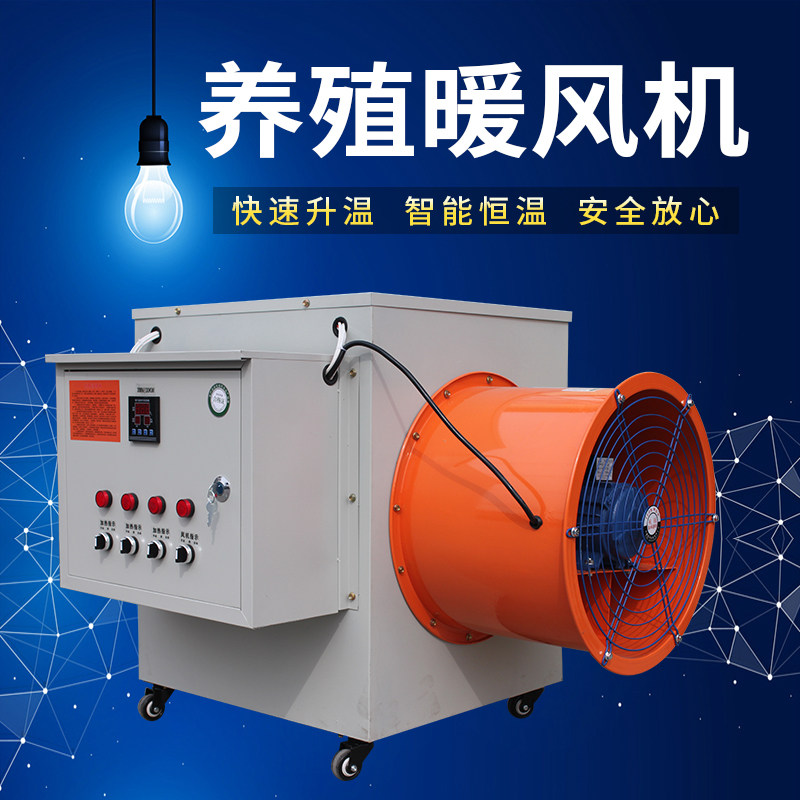 养殖暖风机
Livestock temperature control cabinets
养殖暖风机 电加热恒温热风机:快速升温 · 智能恒温 · 畜牧养殖/烘干/车间取暖
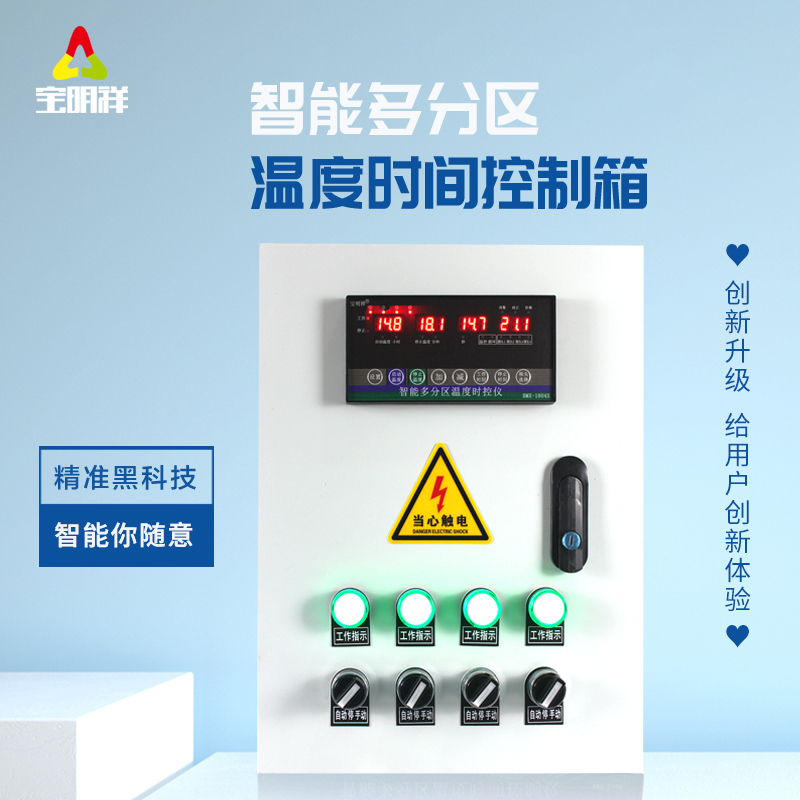 Livestock temperature control cabinets
Digital multi-zone temperature and time controller cabinet for farm fans and cooling pads
Baomingxiang BMX-1804X multi-zone temperature and time cabinet: four seven-segment displays for four zones, temperature control alongside clock-based timing, four run lights and four Auto/Off/Manual selectors, built for farm fans and cooling pads.
 Environmental controllers
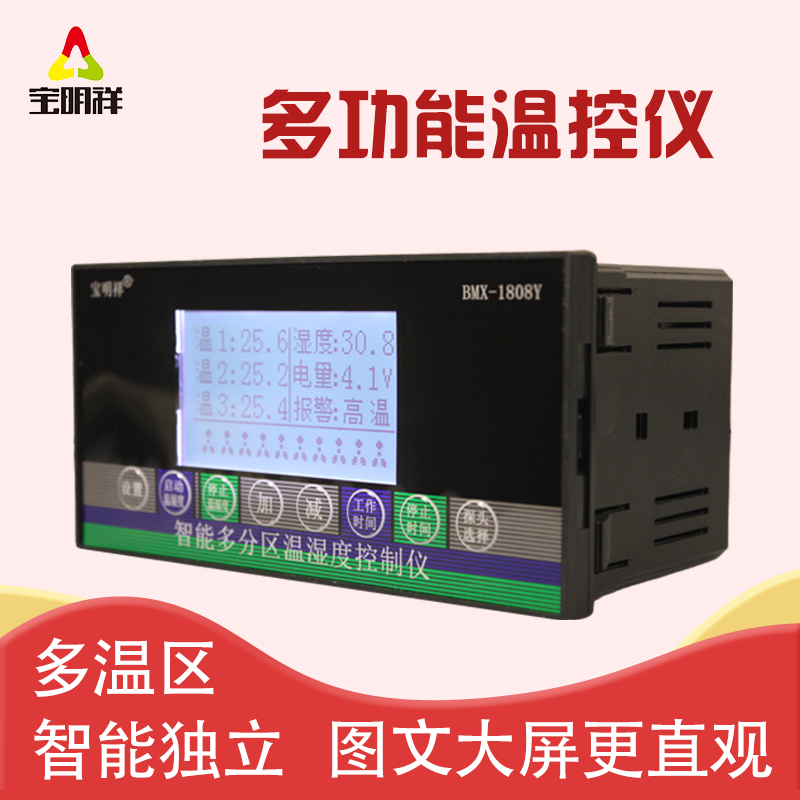
Livestock temperature and humidity meter BMX-1808Y: zoned display, power-failure alarm
Baomingxiang BMX-1808Y multi-function meter: a graphic LCD listing temperature with humidity, battery voltage or alarm state zone by zone, an internal battery so display and alarm survive a mains failure, and eight keys for start/stop temperature and periods. Panel-cut-out mounting for new or existing cabinets.