
Technical team visits Wens in Shandong: filtration and ventilation
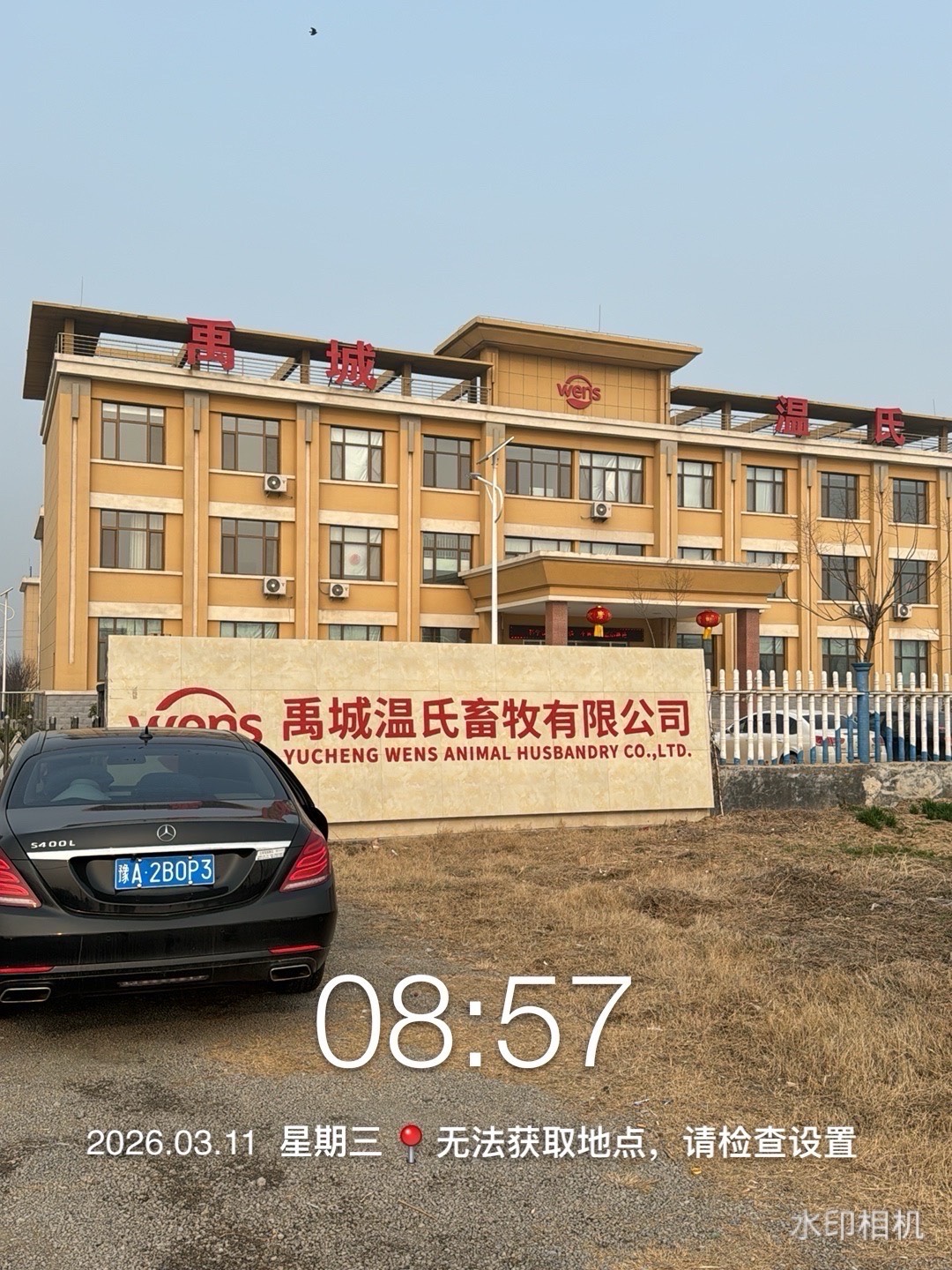
Baomingxiang's technical team travelled to Shandong to discuss positive-pressure filtration and variable-speed ventilation with Yucheng Wens Animal Husbandry: filtered intake air, positive house pressure, staged fan speeds, and a configuration list after reviewing the air paths on site.
At first light, outside the Wens gate in Yucheng
This trip to Shandong was about one specific job for Yucheng Wens Animal Husbandry Co., Ltd.: how to build positive-pressure filtration and variable-speed ventilation into their pig houses. The technical team arrived early, parked, and took a photo of the sign at the gate — the discussions over the following days started inside this building.
Two things to settle: filtration and speed control
Positive-pressure filtration: incoming air passes a filter section first, then fans push clean air into the house. Internal pressure stays slightly above outside pressure, so dirty air leaks outwards through gaps rather than inwards. For breeding farms this is one of the more practical parts of biosecurity.
Variable-speed ventilation: fans are not limited to full speed or off. Speed is staged against house temperature, negative pressure and animal age, so airflow follows demand — faster in the warm part of the day, slower at night, with a smaller temperature swing and less stress on the animals.
Together, the challenge is not a single device but the control logic: how many intake and exhaust channels, how much pressure drop across the filter, which channel starts first, what happens on over-temperature. These have to be settled at the drawing stage.
Why retrofits are the hard part
A new build is a blank sheet; a retrofit is surgery on a house that is in use. Existing air paths cannot all be removed, roof load is limited, probes end up behind feed lines, and several houses may need separate control. On site we write these constraints down one by one, then work backwards to the channel count and VFD configuration of the cabinet.
So a solution meeting is less about products and more about questions: how many houses, how many fans each, is there a cooling pad, where will the filter section sit, who gets the alarm when power fails. Once the questions are answered, the cabinet that gets built will actually fit and last.
Where this discussion stands
The site has been visited and the air paths and equipment reviewed. Next we issue a per-house configuration list and control logic description, then walk through it with both the technical and production teams. Getting details right at the proposal stage is far cheaper than re-wiring on site.
Making farming easier is something we drive to
Travel is routine for the technical team: Hebei, Shanxi, Jiangsu, Shandong, farm after farm. The equipment is standard; the solution is not — fan counts, house types and climates all differ, and only after seeing the site can we say the cabinet will work once installed.
If you need positive-pressure filtration, variable-speed ventilation or multi-house monitoring, contact us on +86 199 3789 6911. Send us your site details and we will start with a configuration proposal.