
Shaoguan retrofit: networked control cabinets with variable speed
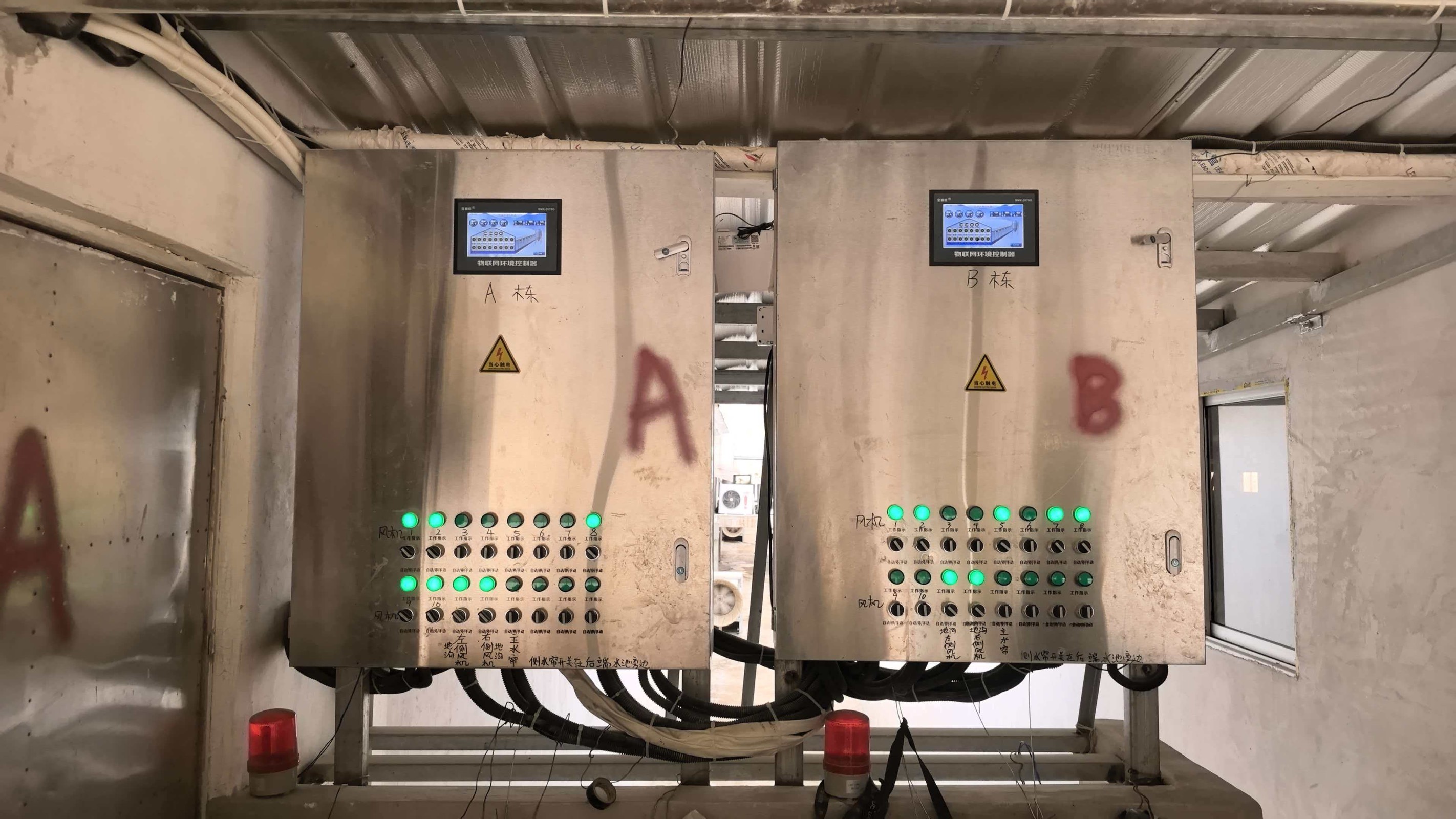
A pig farm retrofit in Shaoguan, Guangdong: two Baomingxiang stainless-steel environment control cabinets, one per house. Sixteen outputs with manual override on each, house temperature and status on the phone, and staged fan speed for a smoother temperature curve with fewer stop-start cycles.
In Shaoguan, the control layer was replaced first
This pig farm in Shaoguan, Guangdong is upgrading houses that are already in use rather than rebuilding. Walls, roofs and cooling pads stay; what changes is the control layer. Two stainless-steel environment control cabinets go into the service corridor, one for House A and one for House B, handling temperature, ventilation and alarms.
The hard part of a retrofit is working around animals already in place. Take out a wall or reroute an air path and the pigs have to move, production stops. So this job started from the control end: wiring in, probes in position, houses running as usual, no disruption to people or animals.
Two cabinets, one per house
The two cabinets sit side by side on channel steel under the ceiling. "A 栋" and "B 栋" are written on the doors by the site technician, so when an alarm sounds everyone knows which house to walk to.
Both enclosures are stainless steel. The air in a pig house is humid all year and washing throws a lot of water around; a painted mild-steel box seizes at the hinges within a year and grows mould inside. Stainless costs a little more up front and does not need replacing every couple of years.
Sixteen outputs, each with its own manual switch
The panel carries two rows of indicator lights, channels 1 to 16. Each channel has a green run light and an Auto / Off / Manual selector. A lit lamp means that channel is running; turn the selector to Manual and you can test a fan or open a cooling pad without going into any menu.
The handwritten labels say a lot about the site: side-gully fans, floor-gully fans, cooling pads. Those are the farm's own names for the equipment, written on the door, far quicker to follow than a channel number.
Variable speed: let temperature travel, not jump
A fixed-speed fan has two states: full on, or off. The house reaches setpoint, everything starts at once and the temperature drops a step; it overshoots, stops, and the temperature climbs back. Dozens of cycles a day, with the pigs living through every swing.
With variable speed, fan output is staged against house temperature: low speed when it is 2 °C off setpoint, more at 4 °C, a small airflow holding near setpoint. Temperature travels to target instead of jumping. With a smaller swing inside the house, stress and respiratory trouble come down with it.
The touchscreen runs the IoT environment controller interface: house layout, fans, cooling pads and probe status on one page. The phone shows the same data, so current house temperature and the channels running can be checked at home or on the road.
Where the money is saved
First, electricity. Fans left at full speed deliver far more air than the house needs; with staged speed most hours are spent at low speed, and fan power falls sharply as speed drops, so the bill follows. Second, trips: no more getting up at midnight to read a thermometer and switch fans by hand — a glance at the phone, with alarms pushed to you. Third, losses: a flatter temperature curve keeps the herd healthier, which shows up in less medication and less setback.
Over a year those three add up to far more than the price difference between the cabinets.
Before retrofitting a house, settle these
How many houses, how many fans in each, is there a cooling pad, where do the probes go, who gets the alarm when power fails. Answer those and the configuration list writes itself. That is how the Shaoguan job was scoped: per-house control first, manual channels left for the site technicians.
If you need an environment control upgrade for existing houses, phone monitoring or multi-house control, contact us on +86 199 3789 6911. Send site photos and fan counts and we will start with a configuration proposal.