At the 23rd China Animal Husbandry Expo in Chengdu, Baomingxiang showed digital, LCD-screen and cabinet-type livestock controllers in Hall 16. The questions that came up most were phone-based remote monitoring and phone-call alarms for over-temperature and power failure.
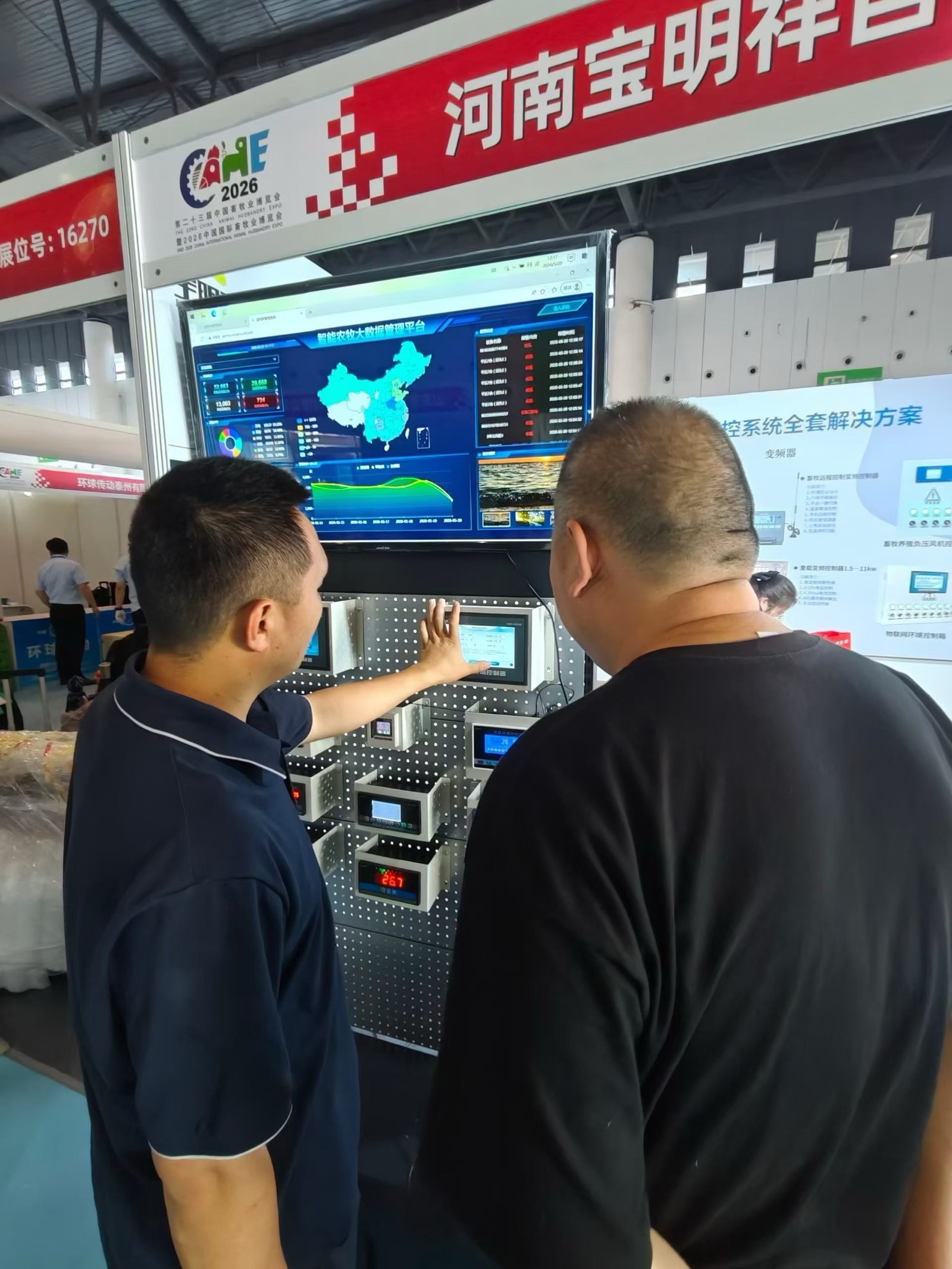
Chengdu, May, Hall 16 — the pig sector
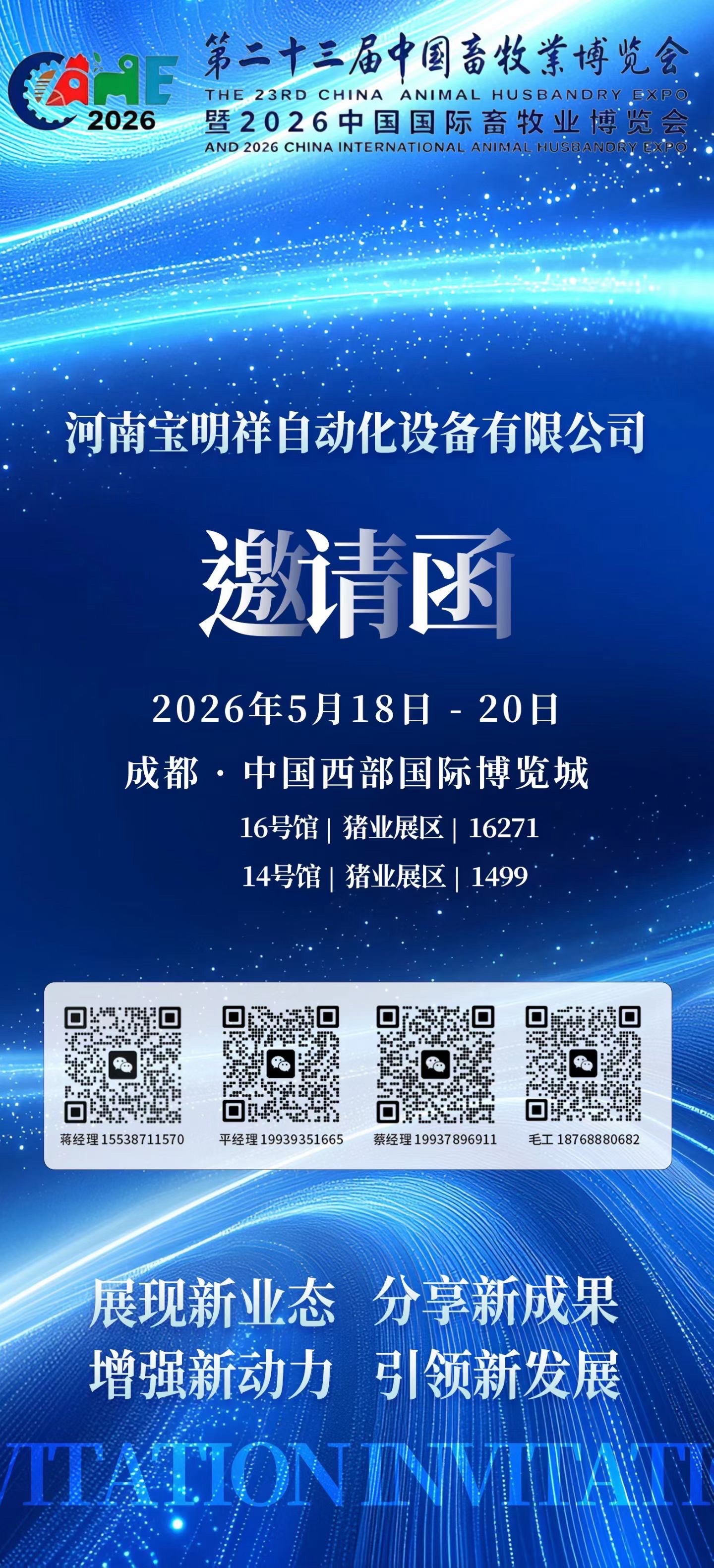
The 23rd China Animal Husbandry Expo opened at the Western China International Expo City in Chengdu. Over three days we held a stand in the pig sector of Hall 16, bringing along our livestock temperature controllers, environment control cabinets and the platform behind them.
A row of controllers, from one house to many
On the table were the types we ship most: digital controllers, LCD-screen controllers, and complete alarmed cabinets. Three- and five-channel units for a single house, twelve- and twenty-channel cabinets for multi-house control — all of them physical, not pictures. Screen size, button feel, whether the terminal blocks are generous enough: easier to judge with your hands than from a brochure.
The question we heard most: can I see it on my phone?
Over three days the most common question was not about specifications but a single sentence: I am away from the farm — can I see the house temperature on my phone?
Yes. The phone-based remote environment control system on the stand exists to answer exactly that: live temperature, humidity, ammonia, CO2 and negative pressure on the phone, plus parameter changes and switching individual fans or cooling pads. A farm owner on a business trip opens the phone and knows what is happening inside the house.
More important than seeing is being called. Over-temperature, low temperature, power failure or a faulty sensor, and the unit phones the responsible person directly — not just a lamp and a beep. At night, when everyone is asleep, a phone call gets someone up. That is what an alarm is for.
Not a single meter, but a whole chain
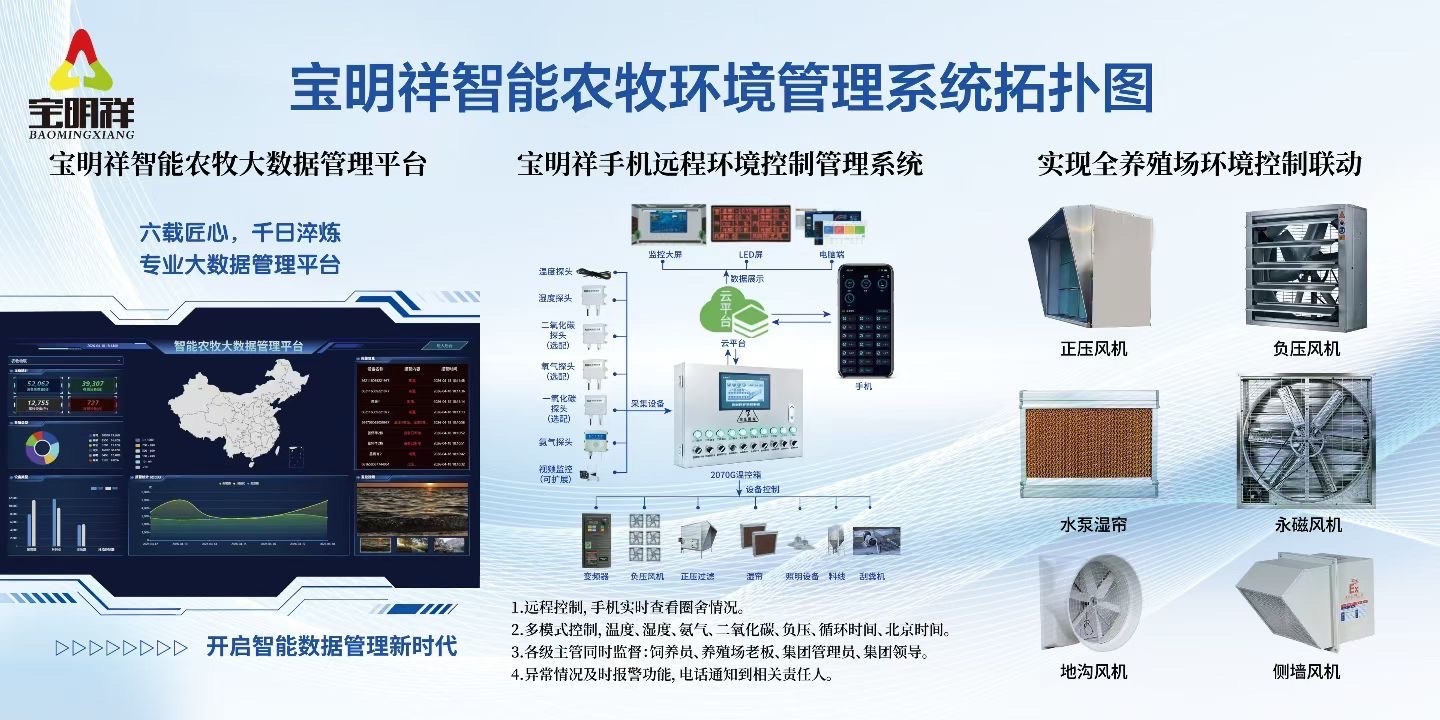
The topology diagram shows the sites we see every week: probes read temperature, humidity, ammonia, CO2 and negative pressure; the data goes into the control cabinet; the cabinet drives positive-pressure fans, exhaust fans, pumps and cooling pads, permanent-magnet fans, gully fans and side-wall fans; the same data goes up to the platform and appears on phone and PC.
Multi-mode control came from site requirements too: some houses are controlled on temperature, others on humidity or ammonia concentration, others on cycle time and negative pressure. Switching mode inside one system beats swapping out the control logic.
Managers at every level see the same data: the stockman watches the house, the farm manager the whole site, the group the summary. Shared data is what makes responsibility clear.
Three days of questions turned into configuration lists
An expo is not only about displaying products. The questions written down over those three days were specific: can an old house have its controls replaced without knocking walls down, where do probes go so feed lines do not block them, will alarms still get out during a power cut, should ventilation or the cooling pad start first.
Back at the factory, each question becomes a terminal on a wiring diagram and a line on a configuration list. By the time the next cabinets are installed, the answer is already on the drawing.
If you could not make it, just ask
The expo lasts three days; enquiries do not. For selection help, a configuration list or site references, contact us on +86 199 3789 6911. Send the house type, number of houses and fan counts, and we will start with a proposal.